Monday, December 13, 2010

Designing Local Currency


I heard an interesting story on National Public Radio the other morning driving to work about Anthropologists studying an "Island of Stone Money." The tiny Pacific island of Yap provides an interesting look at what 'money' can really look like.

Yap islanders today use dollar currency, but hundreds of years ago the islanders made huge limestone discs their local currency. Like many other developing civilizations, sometime in history, the Yap islanders had to agree on a common unit of 'wealth' and 'money' for trading and buying of things. Due to not having any of the common shiny and alluring rich metals around like silver and gold (the springboard of most currencies)- Limestone was the next best 'pretty' thing. So the islanders began harvesting their new currency on another island and shipped it to Yap by bamboo boats.

Now this is when it gets interesting. Envision that instead of the dollar in your pocket- it is a huge limestone disc set-up in town square.

"One key thing about this money: It was really heavy. A big piece could weigh more than a car. A piece of stone money was really valuable; you wouldn't use it for some everyday purchase. You'd use it for something big — a daughter's dowry, say." excerpt from NPR's story.

So the next inventive idea was finding a way to give, trade and use this currency without having to move it, because it's like having to move a car that doesn't run. This is when Yap islanders began thinking abstract... trading and buying on abstract agreement. Much like how we write checks and use credit cards- there's no real exchange of money, just an abstract and invisible agreement.

Driving and listening to this story, I really started to think about the great range of possibility surrounding what a local currency can really look like. I started to reflect on a visit to Transition Town Totnes, England where the first initial Transition Town originated and where I felt such a strange energetic and uplifting buzz in the air there. There is something similar happening in Totnes as was happening on the island of Yap- a different local currency has been invented and is being used successfully, the Totnes Pound.

This same thing seems to be happening in Durango with the Local Food Dollars campaign and the "Be Local Coupon Book" from the non-profit Local First. These initiatives are building up a strong local economic foundation and creating a system where we are all participating in a recycling of our local currency.

How to take part and help support our local economy:

  • Buy a Be Local Coupon Book
  • Shop locally, especially for the holiday season
  • Eat locally grown and produced foods
  • Support local artists, businesses and entrepreneurs
  • Get involved in local initiatives, projects and programs, like the Quest, which is part of Sustainability Alliance of SW Colorado

Sunday, November 21, 2010

Communicating Community Values

Human Needs and Finding the Right Words

People and collectively- communities are greatly diverse. And in so, trying to find collective agreements amongst multi-stakeholders are not always easy. However, considering the very humane nature of people- what we all share, our universal ‘human needs,’ we can maybe easily find a middle-ground, and draw attention to the common thread that binds us all together- our human needs. Afterall, we all are people who generally want the same things. Here I list the nine universal, fundamental human needs from Human Scale Development established by Chilean Sociologist Manfred Max Neef (recipient of the Right Livelihood Award):

  • Subsistence (food, shelter, clothing)
  • Protection (safety)
  • Participation (our social nature of wanting to ‘belong’ and have relationships with others)
  • Idleness (the ability to rest and recuperate)
  • Affection (experiencing care, love and nurture)
  • Understanding (being understood and understanding the world around us)
  • Creation (to be creative and exploring the ability to create things)
  • Identity (identifying with people and the world around)
  • Freedom (being able to act and live with freeness)

This post was instigated from facilitating, in part, a recent public input forum for introducing our community's climate and energy action plan, which heavily communicates the effects and importance of regulating our local GHG emissions. This initial forum was to introduce our community's action plan including GHG emission reduction targets, strategies and actions to help us enhance our community, local environment and support a new energy economy.

Well, I found out fast that some people do not respond well to certain weighted words like "climate" and even "sustainability." These are the new buzz words that carry a lot of different meanings and sometimes can scare people in their multitude of meanings. And depending on your political stance, they may instigate resistance out of misunderstanding and fear.

However, instead of focusing on 'climate' or 'green' anything, it may be more effective to communicate "community values," as in a 'strong economy,' 'thriving community,' 'self-reliance' and 'healthy and productive environment'- even more 'clean water' and 'healthy people.' These may be a little easier to hear and understand- because, after all we all want those things and they come across pretty straight forward, not weighted with mysterious political agendas.

We all do want the same things for ourselves, our families, our community and hopefully the world, we just often get caught up on verbage- rhetoric and linguistics. Trying to define and communicate the importance of climate change, adaptation, mitigation and sustainable development is difficult, however, if we can identify and simplify in rhetoric those things we all want and cherish in life- it becomes a little easier to find our commonalities and agree to disagree on all other things.

Friday, September 24, 2010

the potential in my backyard


I just learned of the great technology the National Renewable Energy Labratory has as open source- In My Backyard (IMBY). By using IMBY, one can find their location on Google Earth and then establish the right RE technology, size and degree of appropriate development.

So if you or anyone you know are thinking of installing an on-site RE (solar or wind), check this software out to better understand the potential for generating energy.

Sunday, September 12, 2010

the banning of bags

A town to the North, Telluride, Colorado has stepped up to banning plastic bags. One more town to jump on the progressive do-better ban-wagon.

At first council members in Telluride, Colorado thought that an approach to weening the community from plastic and paper bag use could begin by charging customers who use plastic and paper bags, yet came to the conclusion that they should- just ban the bags!

The idea or realization to ban bags began when Aspen, Colorado's Office for Resource Efficiency set a competition between the mountain towns of Telluride, Mountain Village and Aspen to see what community could cut its per capita consumption of plastic bags and encourage more community members to shop with reusable bags. Great initiative that took off and inspired the banning of bags totally- both plastic and paper.

It wasn't just about banning plastic, and not just paper too... “The whole point is that the consumer needs to understand the true cost of taking a bag,” said Councilmember Brian Werner, who asked if council has the ability to require retailers to charge a fee on paper bags." from the Telluride Watch

Banning bags at supermarkets and stores is not an easy thing for a city council to decide. There's a lot to consider when demanding community members have to pay for the use of bags. It's easy to assumer that everyone should just always have a reusable bag on them, but even as much as I try, it is hard to remember and walk into a store with a bag to use. As a council member of Telluride said: “We need an ordinance that makes sense, that is easy to work with, that has the support of a majority of the community and retailers, and that will work well with tourists andlocals."

I think starting with a small fee to use bags, that often are overused excessively, is a good place to start, yet accompanied with initiatives at the local level to educate consumers and provide creative and effective ways to encourage reusable bags- like an annual bag design competition to get community members and youth involved in using, supporting and advocating for reusable bags, as well as local artwork like they do in Frisco, Colorado with their annual contest and in Austin, Texas with 'Keep Austin Beautiful's' "design-a-bag" initiative.

If you are interested in hip and cool recycled material bags, great for the markets, visit my other website and Etsy shop.

Wednesday, September 8, 2010

Hunting Season

... fruit hunting season, that is.
Now is the time that I start my annual urban foraging for fruit hanging from trees, overflowing from local farmer's beds and even wild produce from the mountains, like Chantrell mushrooms.

I live in a mountainous valley that was once a heavy fruit-producing valley, with a large river coming down from the San Juan mountains that still feeds the remnants of this once fertile fruit baring land. This year is not as good of a fruit year as most, due to a hard frost this past spring, yet one can still find plums and apples ripening. An old landlord just called to tell me to come harvest some concord grapes as well. The canning begins.

In most places I have lived and visited in the autumn, I have found fruits for the picking. It just takes an adventurous will and maybe even some networking to find people with unwanted fruit and produce. Some places like Hood River, Oregon have a Fruit Loop Map as well as Portland, Oregon that has a 'pick your own fruit' map.

How can your community design a local urban/rural food map to help people find wanted/unwanted fruit hanging from the trees and overflowing from some farmer's beds that just can't be harvested fast enough? Is it possible for communities to map these local food sources to help direct free food to food pantries and maybe even schools or just help community members access free local produce?

How to get started in creating your local food map?
Start by looking at other communities working with food maps, like those in Hood River, Portland or how Making Local Food Work in England has established a step by step approach to establishing food web mapping.
1. Hold a community meeting or workshop at your local library, coffee house or park.
2. Build a hot core of people dedicated to creating a food map.
3. Bring in people on board from the community- put on a community ride/rides to map out local fruit and produce in your area.
4. Advertise for some local artists to volunteer their talents to design the food map.
5. Distribute and post on local social platforms and city website.
6. Maybe even carry on with your local food campaign by holding canning and preserving workshops, bringing community members together for local food preservation

Monday, September 6, 2010

Encouraging Local Energy

So we all know, by now hopefully, how promising renewable energy development is, how needed it is and how fast the field is developing. Yet, living in the South West of the US (where it is practically raining sunshine 320+ days of the year), RE development- especially on a local, distributed, scale is sluggish and barely seems to exist. How is this possible, that what is needed and pretty much just as easy to implement and develop as other non-renewable dirty and finite industries are? Is it because most renewable energy development in the US is still on the centralized level- a big development situated far from the consumers using it? I like to think the local capacity is there, to support such development, yet there is not the same governmental support here in the States as there is in other countries leading in RE development, like Germany and Denmark. I won't go into this debate, yet draw attention to a solution on the horizon that will hopefully encourage more RE development on the local level- feed-in tariffs.

After traveling through Germany and Denmark and witnessing so many small towns and cities producing their own heat and electricity (combined heat and power), and actually profiting from their RE- it is crazy to come back to the US and see how slow we are in establishing this win-win situation. The thing that has helped countries like Germany and Denmark succeed in their development on a local level is due, in part, to the establishment of the Feed-In Tariff or 'renewable energy payments' at the local and Federal level. A Feed-In Tariff is a policy mechanism to encourage RE development by establishing an adequate, fixed rate for the power generated by the producers, especially in favor of small and/or private producers, like a household or cooperative. So producers, who invest in the technology and take that leap of investment to get RE rolling in their locality can first actually 'access a grid' (the system for storing and distributing energy), have a long-term agreement for the use of energy produced and are not left behind if the cost of energy drops.

I'm very excited that my city's electric company in Durango, is starting to introduce this policy to the community. They will begin by holding an informative meeting with the public and get the ball rolling towards more localized energy production.

Getting Involved in the City

Until recently, I wondered often how I could get more involved in my community's planning and development and yet never thought to look into what was actually happening around the City Council. I'm not sure how I never heard of 'City Boards and Commissions' until now, but what an eye opener for how to get more actively involved in the shaping of my community.

City Boards and Commissions are basically a collection of different boards and commissions, each with their own specific responsibilities that relate to the City Charter, City Codes and other city-specific resolutions and aspects of their long-term action plans. Each Board and Commission makes recommendations to the City Council, with the hopes of maintaining a diverse representation from the community when it comes to planning.

If you want to really get involved in your community, look into sitting on either a board or commission to partake in the integrative and collaborative democratic process, helping your City Council plan, shape and grow your community.

Visit your local City building or website to inquire into what openings may exist with the various boards and commissions.

Saturday, August 21, 2010

Slow Food

While in the Tuscany region in the quaint and beautiful town of Lucca I stayed with a wonderful woman, Ana, who lives in the square where Puccini was born. She told us how the only way she knew the history of his life was from living on the second floor with her windows open hearing all the tour guides of many different nationalities tell the life story of Puccini. Anyways, I tell this story because my stay in Lucca was an unforgetable 'slow' one. We woke slowly, went to the market slowing, walked the walled town of Lucca slowly, sat at a cafe slowly and ate slowly. 'Slow' seemed to be in the air and maybe staying with Ana helped us acclimate to the new pace of things. I remember being in Florence eating a cafe for breakfast and just watching the people, who seemed to be the usuals, come in on their way to work. No one got anything to go, but if in a hurry stood at the cafe bar and drank some espressos, chatted or looked at the paper and then went on their way. I never saw any 'to-go' containers or Italians ever ask such a question.

So, having returned to the US a couple months ago, I am still adjusting to the differences lived abroad versus here in the States. It is strange coming back with somewhat new eyes to all the customs I grew used to living with in the US, like always getting my coffee or espresso to go. I wont go into all the things I would like to change about American culture and will stay on the positive side to rave about now living in a town with a great farmer's market and growing support for local sustainable food production. Having just been in Italy, I see my little town's initiatives leading towards a Slow Food Movement here and am very excited to support it in any way. That means getting to the market soon for some veggies to last me the week.
What is Slow Food?
Food is the other thing that seems to be revered quite different here in the US compared to Italy, France and Spain. It's slower there, faster here, but it seems that we Americans are slowing down, digging in and getting more involved in the things that nourish us.

So what does Slow mean? The Slow Food movement started in the city of Bra, Italy with community members wanting to support and promote healthy living, consciousness and appreciated agriculture and well, eating.
"The slow food movement is a revolt against standardization and mass production. The aim is to protect the environment, promoting local goods and production as well as sustaining the uniqueness of each individual city (from Sustainable Cities)."
So how can us Americans advocate Slow Food here in the States? Well, it is already happening in many places and it is probably already happening in your locality. Anywhere you can find a local farmers market, is a step in the right direction- the best direction- towards sustainable localized agriculture, community resilience, mindfulness and better living. So the way to advocate for Slow Food is be part of it, instigate it or support it in any way possible.

What's growing around you? Look for fresh local produce, free-range happy and healthy meats and local artisan homemades to make your life a little more fulfilling, while taking an active role in shaping a better future for you and others around the world.

Check out The Habit of Being for some great ideas and inspiration on harvesting wild foods, living 'slow' and sustainably.

Sunday, July 25, 2010

Being a LEEDer

If you are in any part involved in sustainable building or community development in the USA, you've probably heard something about LEED.

LEED is part of the U.S. Green Building Council, an internationally recognized green building certification system, which helps to ensure that 'green building' (commercial or residential) or a community is actually 'green' by providing a third party assessment of the development and a certification. LEED more specifically helps give credit to design and development that is working towards "improving performance across all the metrics that matter most: energy savings, water efficiency, CO2 emissions reduction, improved indoor environmental quality, and stewardship of resources and sensitivity to their impacts" (as quoted from the LEED website).

As I carve out a career in sustainable community development, I see the LEED certification as an essential educational process to explore and a smart tool to possess for proactive planning and consulting. I'm interested to find out how easy it is to get this certification and wondering what other benefits having a LEED certificate provide, like networking with communities, organizations and businesses using LEED or moving in the direction towards more progressive and assured sustainable development.

Central questions:
What does LEED do? It helps measure

One may become a LEED Green Associate or possess other LEED Professional Credentials (LEED APs) by taking the LEED Exam. If you are interested visit the LEED Professional Credentials page and download the Study Guide for the exam. But first, visit the GBCI Candidate handbook to check out what type of credential you are seeking.

You can check out what type of LEED certifications may be right for you...


A side note- the Green Building Certification Institute is looking for volunteers. Your help may be counted as hours towards a certification!

Tuesday, July 20, 2010

Slow Housing


I am currently trying out a different living situation- shared housing. I am renting a renovated apartment in an older home with other tenants. This is not anything new to most people. I imagine a large population of Americans live in some sort of shared housing, whether condos, apartments or intentional housing. But, for me, I have not really lived in too many situations where I share a building with other people. I am more inclined for singular homes promising quiet and privacy, preferably in the country. However, I have been thinking about how much more sustainable shared housing is then individual housing and about how many people around the world often live in buildings sharing walls and roofs with other people.

In regards to sustainability, it makes sense to at least try this style of living out because it is centrally located so I do not need to commute, I am sharing space that already exists with other people and making relationships. Now I just have to turn the whole building onto edible landscaping or at least a shared garden, utilizing local renewable energy and increasing energy efficiencies and energy conservation... the challenge begins with 5 Steps towards more Sustainable Shared Housing:
Step #1- find out how to utilize electricity generated from renewable energy sources... maybe even convince the landlord to invest in solar panels in which all tenants would find reduced electricity bills due to generating a portion of our own electricity needs.
Step #2- already into July, look into what type of foods can we still grow and harvest into the autumn? create raised beds or planters to share
Step #3- designate a composting corner in the shared backyard to enrich local soil and not throw away nutrient-rich food scrapes and install an easy-to-use recycling area for all tenants to use
Step #4- education on weatherization as the autumn approaches with cooler temperatures- turn the landlord of the building onto more weatherization projects for the entire building and also educate tenants on energy conservation.
Step #5- really audacious, but create a living roof to 'green-up' space or install living walls in the building to help circulate heating and cooling (depending on the season) throughout the space and create healthy atmosphere
I have been on a 'slow' kick lately, looking into slow fashion, slow food, and now slow housing. The Sharing Solution is a great informational blog speaking to this evolving movement, as more and more people consider how to live and promote sustainable living. Check out a list of what participants at a Bioneer's Conference wrote for what they thought was a "Slow Homes Movement" at: "Bioneering" Ideas for Sharing, Part 4: The Slow Homes Movement"


Friday, July 16, 2010

Initiating a Transition Town

While traveling through Europe and especially England, I visited a few Transition Towns. Totnes Transition Town , in England, is the stand out (which I have posted information about earlier on this blog) due to it being the original Transition Town where the founder lives and continues to spearhead and inspire collaborative programs and initiatives related to the Transition Town movement that ripples out through communities wanting to do the same around the world.

As mentioned before, while walking the streets of Totnes, I could sense there was something quite special about the town and was amazed and delighted to see the variety of community-owned shops; artisans galleries, speciality shops, bakeries, quaint cafes and resturants, independent bookstores, little groceries selling local foods, natural health stores, handcrafted wears and body shops and more. In a way it did remind me of my community, Durango, Colorado but on an even more localized, down-home, humbled wavelength. After visited Totnes and reading up on all the community initiatives happening, I also ended up viewing the In Transition: The Transition Town Movement Documentary at the local Sustainable Living Film Festival in Karlskrona, Sweden where I was studying Sustainability at Blekinge Institute of Technology. The documentary is great and I recommend you see it and even more get a bunch of community members together to watch it and get inspired to start your own Transition Town in your town!

And this is what I am interested in doing here in Durango, Colorado. I am in the process of researching the steps in which other towns have initiated a Transition Town movement in their own communities and I hope to share the steps and process of doing it here with you. I know in theory it seems like an easy thing to do- talking to people, getting a steering committee together, joining the network and connecting to other Transition Towns to share stories and processes about success aspects and such, but the initial stage of communicating to the community and getting support, involvement and momentum seems a little daunting. However, I realize, here in Durango, similiar initiatives are already happening with great non-profits like Four Corners Office for Resource Effieciency, the Sustainability Alliance of Southwest Colorado and Turtle Lake Refuge, just to mention a few, as well as a weekly local farmer's market and great locally-owned and supported businesses, orgnizations and programs... yet it all needs some glue it seems. It seems, often, in a lot of places that there are great things happening, but they are not glued together in some sort of overall momentum building towards a shared vision.

A shared vision- the secret to success...

Visiting communities in Denmark and Germany that were initiating and establishing community renewable energy projects, it seemed that the key to their success- producing community supported renewable energy and profiting from it with good return on investment, was heavily related to them having a shared vision which built an image and town branding, like "Clean City..." or "Green City..." or "Fair Trade City..." that attracted tourists and residents and helped retain the young people that would continue to make that town or city a great place to live.

So what is Durango's vision? What does Durango want their image to be- their branding as a model city? I think this may be a first step that either leads to a transition town movement or maybe the transition town movement would help Durango discover???

Tuesday, July 13, 2010

Zero Waste?

So what exactly does Zero Waste mean? Is it possible? These were my questions when I read that Telluride, Colorado has a Zero Waste Action Plan for the Mountain Village of San Miguel county. And looking it over, it seems like a no-brainer that I want my community to think about too!

The Action Plan is laid out in these basic, but extensive areas:

Clean Production: More resource efficient, recoverable, less toxic production

Retail Stores: Consumer education and take-back programs (where products can be returned to the provider to recycle)

Consumer Buying Power: Creating consumer demand and eco-market & manufacturing standards

Producer Responsibility: Manufacturers are part of the solution, taking back their products or supporting recovery infrastructure

Resource Recovery Parks: Community center for total recovery, reuse, recycle, composting, material exchange and recovery

Jobs, Jobs, Jobs: Redesign and recovery. Create more jobs than resource destruction- Green Market

Changing the Rules: Removing market barriers and inequalities to support sustainable industry.

Shifting Subsidies: Stimulating green practices rather than favoring waste and pollution

Design for the Environment, Not the Dump: All products must be recoverable through reuse, recycling and composting.

That's it. Simple, common sense- right? All of these areas highlight thinking upstream, employing an iterative process, and using Cradle to Cradle design or darn near close. I believe this is the vision of tomorrow- it will become mandatory, necessary and favored, because it advocates for a better EVERYTHING.

However, with any long-term vision, there are hills to climb and some initial obstacles to change.

There are many areas that Telluride is working on to make this Action Plan a reality in fulfilling their vision of Zero Waste. Here are the areas which need serious consideration, which is probably a similar situation for all communities wanting to work towards Zero Waste:

"After review of the local solid waste, reuse and recycling system, there are a number of services that stand out as critical to moving forward with the Zero Waste goal in this region:

Composting - A composting facility is needed to compost all organics, including yard trimmings,

food scraps and food-soiled paper

Resource Recovery Park - More efficient recycling operations are needed to process reusables and recyclables from the region, including recyclables from construction and demolition debris, ideally in a Resource Recovery Park design

Solid Waste System Redesign - Garbage contracts, rate structures and services provided need to be revised to provide incentives to all involved to move to Zero Waste (as detailed above)."


Tuesday, July 6, 2010

Clotheslines are Beautiful

While traveling in Europe, I fell hard in love with clotheslines!


How have we come to be so disconnected and pulled away from the simple pleasures in life, like hanging clothes out to dry, breathing in fresh air, observing the landscape or cityscape, a neighbor, a fox or a passerby- saying hello? I know I am being over romantic here. I know that it is easier to sometimes say "I'll hang them up later" and later becomes a day, where you then have moldy and musty clothes. I know, I know it is sweet time when you are busy and pressed to get things done. But, what if we didn't have the luxury of a dryer and you knew that was the only way your clothes would get dry? Would having to hang clothes out to dry enrich our lives with more connection to the world outside and around us?

I think so.

I see clotheslines as part of the Slow Movement. The act makes you maybe move slower. Maybe makes one realize the joy in how clothes can smell like the sky and breeze and be warmed by the sun.

So, anyone interested in spreading a National Clothesline Day? I aim to set up an installation of a beautiful clothesline demonstration this summer at my local farmers market, so check back to hear how it goes and see pictures.

Enjoy the summer and turn that dryer off- save energy and enjoy the outdoors!

Monday, July 5, 2010

Big & Fast, we are

After being back in the US for a few weeks now, I am still adjusting to the way we Americans do things here compared to the things and practices I grew accustomed to in Sweden and the European countries I visited while abroad. These disturbing 'things' can be simplified into all things fast we are sometimes associated with- food, traffic, work, time in a day...


Flying from Spain (which isn't the greatest mode of transportation in itself) and it's siestas into fast NYC was an interesting homecoming, especially because we did not just land and find friends or family welcoming us back to a home to recupurate from let jet-lag and culture shock, but a trip to Budget Rental and onto the road to Michigan. Our plan of visiting my brother in upstate NY, devised back in the winter, was foiled and this was the next best thing we thought. However, after getting used to not having a car, using public transportation, riding a bike and witnessing most people making similar choices, it was a surreal experience landing back in this country of 'fast' and 'big' things. Also never visiting NYC before and navigating out of the city through all the suburbs on our way out like Harlem, the Bronx and others- it was crazy! I was practically freightened to be in our rental car navigating, in and out, through the sea of vehicles.


I am still getting used to being back on the road with so many over-sized trucks, SUVs and big vehicles. With it being 4th of July and celebrating our Independence, I find it somewhat ironic that 'independence' can be associated with big trucks sometimes- this is not independence, this is dependence of a finite supply of oil that will be the downfall of the US economy if we are not smarter. Maybe someday a wind turbine can signify Independence more than a big loud truck.


So, some solutions...

I think I may stick with not owning a vehicle for a while. After growing used to not having a car in Sweden and just biking, walking and using the bus, I have found this to be quite enjoyable.

WALK
BIKE
BUS... any PUBLIC TRANSPORTATION

EMISSION TESTS
smart vehicles- biodiesel, electric, smaller and more efficient vehicles

How can we make this smarter way of getting around more sexy? How can we promote healthier habitats while promoting healthier lifestyles and ways of getting from point A to point B... it is more about looking at the service that people need instead of the 'products' like big and 'false sexy' vehicles. We can do better, right?

Smart Grids


On my recent road trip from Michigan to Colorado I occupied myself with a collection of current and older National Geographic magazines and fed myself on tantalizing advancements in the developing renewable energy grid systems in the US and Europe and ever-growing solar energy developments in the US. This information is specifically exciting to me because I just completed my MSc thesis on Sustainable Community Renewable Energy; a Strategic Approach for Communities and along with two colleagues, designed the Sustaianble Renewable Energy Tool (SCRE Tool) to help support communities and organizations wanting to initiate renewable energy projects or assess current ones in working towards more sustainable energy development strategically.

So what is a Smart Grid?

In National Geographic July 2010, Joel Achenbach's article The 21st Grid walks us through what exactly the US electricity grid looks like... a crazy unplanned complex and inefficient system getting more and more complex and unstable. Here he also introduces a solution to this mess we unconsciously depend on and support daily with the developing technology of the Smart Grid. And having just lived in Sweden and visited Denmark and Germany, I know first-hand what these 'Smarter' grid systems look like and what type of benefits they create for consumers and the nations employing them.

A Smart Grid, basically means that it is a 'smarter' electricity grid system, in that it is able to 'sense' and 'self-heal' itself with peaks, lows and the changing demand of electricity in the grid. As Achenbach puts it:
The precise definition of "smart" varies from one engineer to the next. The gist is that a smart grid would be more automated and more "self-healing," and so less prone to failure. It would be more tolerant of small-scale, variable power sources such as solar panels and wind turbines, in part because it would even out fluctuations by storing energy—in the batteries of electric cars, according to one speculative vision of the future, or perhaps in giant caverns filled with compressed air.
A Smart Grid offers more than more efficient, stable and safer electricity supply, it would also help us all to become more conscious of our electricity use and advocate for consumers to be more involved in the process of consuming and depending on necessary electricity. Once again I'd like to quote Achenbach, especially because it echoes what I have been researching and designing in my thesis work:
But the first thing a smart grid will do, if we let it, is turn us into savvier consumers of electricity. We'll become aware of how much we're consuming and cut back, especially at moments of peak demand, when electricity costs most to produce. That will save us and the utilities money—and incidentally reduce pollution. In a way, we'll stop being mere passive consumers of electrons. In the 21st century we'll become active participants in the management of this vast and seemingly unknowable network that makes our civilization possible.
Attention. You may be part of something great that happens to the US...
According to government sources, the United States plans to announce the formation of the International Smart Grid Action Network, or ISGAN, to expand the U.S. energy market through smart grid standardization and take the lead in the new energy business. The Obama administration is expected to make the announcement at the first ministerial meeting on clean energy to take place in Washington, D.C. on July 19-20. For complete article, visit the new article at Smart Meters website.
Smart Meters, Leverage Points for more sustainable energy consumption...
Along with the Smart Grid, the Smart Meter which helps consumers better understand their electricity needs and their consumption of electricity is a growing solution for smart consumers. Smart meters are very popular in renewable energy progressive countries like Denmark, Germany and Sweden.
For more info on Smart Meters see this great introductory pdf

Sunday, May 16, 2010

Transitioning

I have been slow on sharing information on all things related to sustainability that I have been experiencing of late in Sweden. Maybe this is due to writing a Master's thesis? However, now that the thesis is being finalized, I can catch you up on some things very inspirational- The Transition Town Movement happening consciously and even unconsciously in communities around the world.
Germany
Aero Island, Denmark
Fredrickshavn, Denmark
Southern Denmark

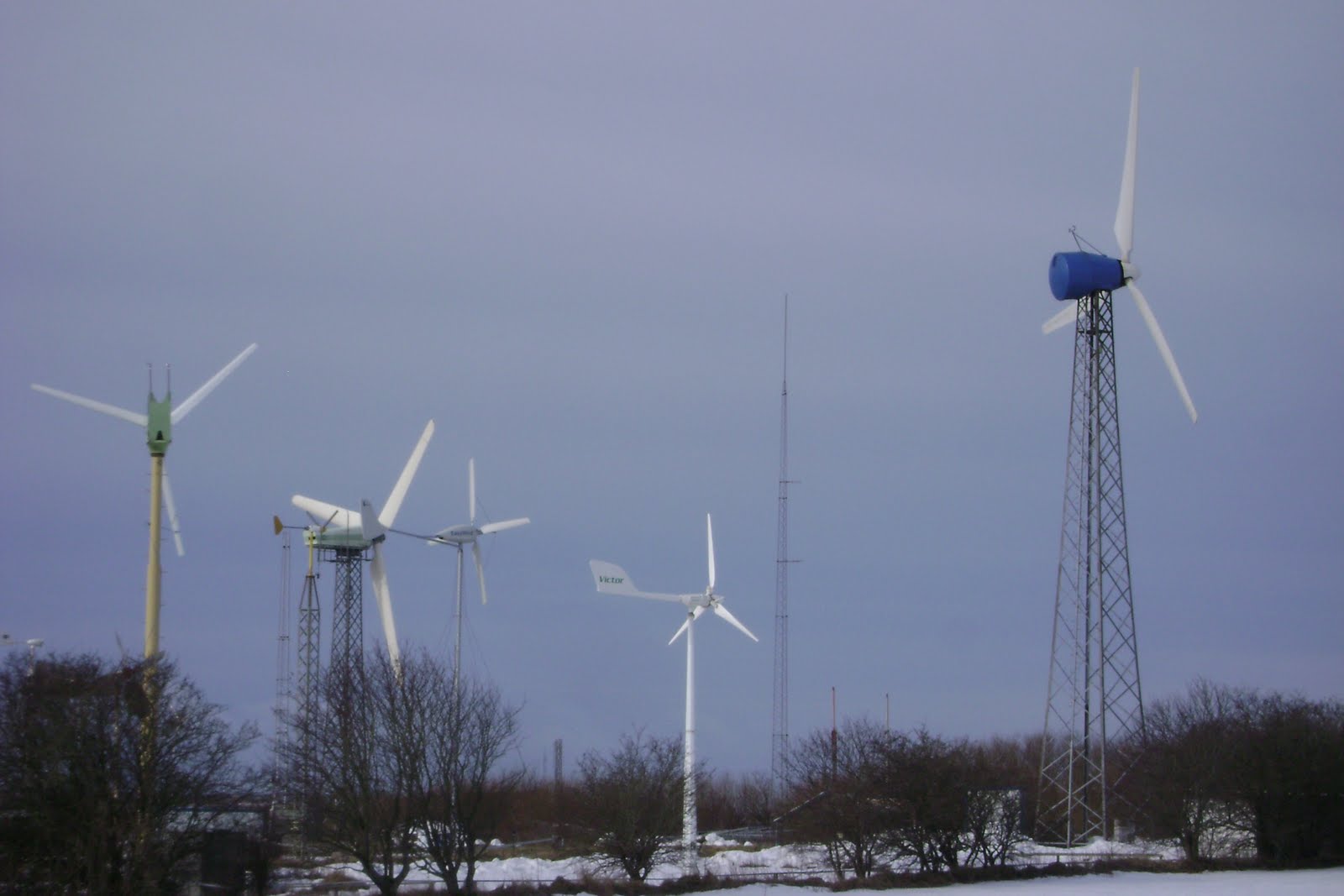
Well, first, to catch up- I and two other colleagues traveled to Denmark & Germany via Southern Sweden to learn from many communities working with decentralized community-supported renewable energy. Communities in these countries are total role models for other communities and great teachers in lending first-hand experience in how to successfully establish community-supported RE. Through interviewing people across Denmark and Northern Germany we gathered a great amount of 'keys to success' that helped us formulate and design the Sustainable Community REnewable Energy Tool (SCRE Tool), which I'll be posting soon in all of its glory. For now, you can visit our blog- Renewable Communities reporting on our work with SCRE.

Here you can see a visual relating SCRE as the ideal vision for communities to 'backcast' from and work towards, where the first stepping stones for many communities is transitioning from insufficient and unsustainable centralized non-renewable energy towards renewable energy development, and then ideally incorporating as much community involvement and participation as possible making the RE production distributed and localized- this is community renewable energy (CRE).

Please visit Renewable Communities to contribute to this SCRE Tool with feedback, if you are a community member working with renewable energy.

Wednesday, April 21, 2010

The Plastic Challenge


The Plastiki Challenge
Why is there a team of young adventures out in the middle of the Pacific sailing a boat made of recycled materials? Why Plastiki?
Because:
  • It is estimated that almost all of the marine pollution in the world is comprised of plastic materials. The average proportion varied between 60% and 80% of total marine pollution.
  • In many regions in the northern and southern Gyres, plastic materials constitute as much as 90 to 95% of the total amount of marine debris (see The Great Garbage Patch)
  • Scientists estimate that every year at least 1 million seabirds and 100,000 marine mammals and sea turtles die when they entangle themselves in plastic pollution or ingest it.
  • According to Project Aware, 15 billion pounds of plastic are produces in the U.S. every year, and only 1 billion pounds are recycled. It is estimated that in excess of 38 billion plastic bottles and 25 million Styrofoam cups end up in landfill and although plastic bottles are 100% recyclable, on average only 20% are actually recycled.
"It’s about recognizing that waste is fundamentally a design flaw (it does not appear in nature) It’s about re-thinking waste as a resource. It’s about cyclical ‘cradle-to-cradle’ philosophies rather than linear thinking when it comes to how we design our world. It’s about a better understanding of the lifecycle’s and materials used in our everyday lives."

"It’s about encouraging the world to reduce, reuse, recycle and rethink more of the planets natural resources. It’s about delivering a spectacular global “Message in a Bottle.”

Want to learn more about what you can do for The Great Pacific Garbage Patch and the reality of plastic waste... visit The Garbage Patch

Monday, March 29, 2010

"The Danish Way"


I recently went on a tour of Denmark in search of community powered renewable energy and found great projects, testimonies and great success stories from all across the country for my Masters thesis research that I and two Master's of Strategic Leadership towards Sustainability grad students are currently working on.

We started our tour by visiting The Nordic Folk Center, which stands out as an international beacon for renewable energy technologies and education. We were lucky enough to interview Preben Maegaard, a legendary Danish renewable energy activist and expert, on the success of Danish renewable energy and gain first-hand insight into the "The Danish Way" of choosing a clean and renewable energy path as a nation and through collective grassroots initiatives.

Denmark provides great case studies for other communities around the world learn how to successfully establish renewable energy.


Sunday, January 17, 2010

The Art of Hosting


image taken from The Learning Host

" The Art of Hosting and harvesting conversations that matter is a new practice of democracy that we really need in the world now "

Just how powerful is the art of dialogue? Just how powerful is asking the right questions? What else is as powerful as making meaninful conversation and connecting to another through words, senses and openness? Do we pay enough attention to the words we construct and let speak for who we are and what we yearn to find in and collect from one another?

The Art of Hosting is..."is a pattern and a practice that allows us to meet our humanity in ourselves and in each other - as opposed to trying to be machines meeting"

Soul Recovery Service


Felicity Fenton's Soul Recovery Service offers to collect your 'emotionally hindering' objects that keep you from fulfilling your days, wasting your precious time through or withholding emotional freedom.
What are the things in your life that hamper your creativity, energy, and free spirit? Even if you do not have anything bringing you down, but still want to be inspired visit Felicity's website for some funky inspiration.

I would send Felicity my computer if I didn't need it so much for school...

Friday, January 1, 2010

New Year's Sustainability Resolution

My 2010 New Year's Resolution list... of course to grow & evolve

1. EAT as LOCAL as possible
2. limit 'take-out' containers... 'to go' coffees and over-packaging from the market
3. Walk, BiKe and bus more than any other mode of transportation
4. limit use of dryer- hang dry clothes and limit consumption of water- try taking shorter showers
5. Support stores that sell ethical, organic and fair trade goods and buy second-hand more often than new
6. be healthy & happy in my daily life and try to spread it around
7. Encourage and Engage others in meaningful conversation and laughter
8. talk with more strangers, play with children and get to know more elders and people from different nationalities and talk about sustainability without using the word 'sustainability'
9. make my actions meaningful, embodying and living 'simple'
10. GARDEN and help others grow food to foster local food production & sovereignty

Thursday, December 31, 2009

Transition Town Totnes, UK

I recently visited Totnes, UK and fell in love with the little town. I only walked down Fore St and High St, yet saw so many great things happening. To a visitor, one cannot tell what 'transitions' are happening except to get a little taste of the base-level social transformation happening in this little town. After trying to visit the Totnes Transition Town office and finding them closed I followed others in and out of locally owned and operated shops, feeling a nice vibe from the community. I am not sure what type of economy Totnes has, whether it is tourist-based, but somehow the town supports a great vibrant market economy. Small local bookshops, natural food stores & markets, shops spilling with organic furnishings, clothes and bath & body, bakeries, craftsman and art shops, galleries and second-hand stores to name a little line the streets. I wondered, "what is happening here, to support these people and these livlihoods?" Is this a basic tourist town or a town that has something special happening?

There's a lot of small acts happening in Totnes to make it feel special, like "Sacks," a traditional small "mom & pops" wholefood shop which has kept a beat since 1976, now nestled between swanky hipster art shops.
Love Local Food is something I didn't see, because it is a mobile shop- but can see how it fits right into Totnes. Love Local Food is a social enterprise and not-for-profit business supporting small farmers and Totnes local food systems. It's a great idea to spread in other towns!
Totnes has the Totnes Pound Project ongoing to help reinforce and support a localised economy. And over the next 12-24 months, Totnes aims to create an Energy Descent Action Plan (EDAP), where the community wants to transition from fossil fuel dependence to 100% renewable energy technologies.
Totnes Mission- A Mission for Every Town
To explore and then follow pathways of practical actions that will reduce our carbon emissions and dependence on fossil fuels.
To build the town's resilience, that is, its ability to withstand shocks from the outside, through being more self reliant in areas such as food, energy, health care, jobs and economics.


If you're still interested visit Transition Town Totnes or Reconnect UK online