Monday, March 29, 2010

"The Danish Way"


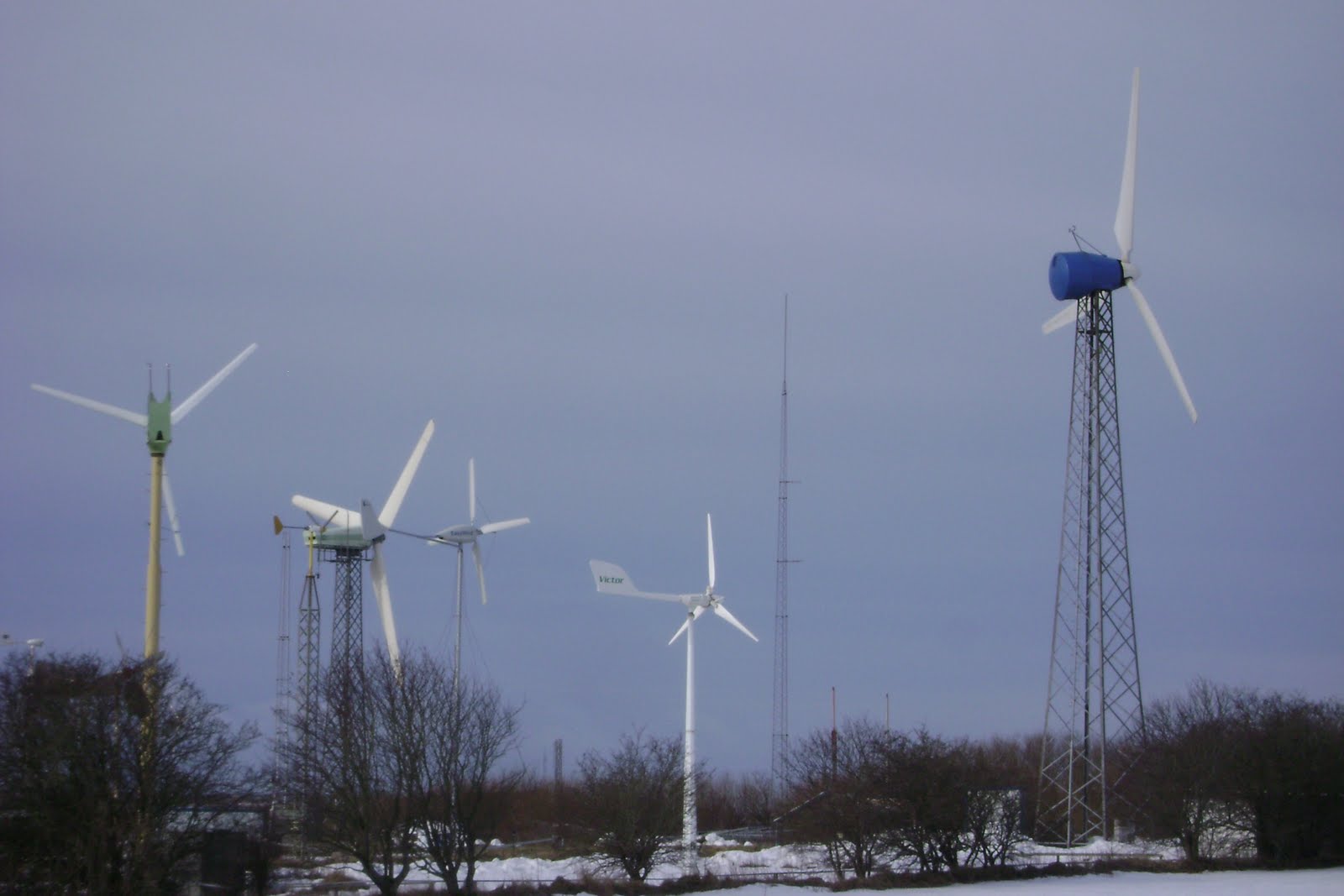
I recently went on a tour of Denmark in search of community powered renewable energy and found great projects, testimonies and great success stories from all across the country for my Masters thesis research that I and two Master's of Strategic Leadership towards Sustainability grad students are currently working on.

We started our tour by visiting The Nordic Folk Center, which stands out as an international beacon for renewable energy technologies and education. We were lucky enough to interview Preben Maegaard, a legendary Danish renewable energy activist and expert, on the success of Danish renewable energy and gain first-hand insight into the "The Danish Way" of choosing a clean and renewable energy path as a nation and through collective grassroots initiatives.

Denmark provides great case studies for other communities around the world learn how to successfully establish renewable energy.


Sunday, January 17, 2010

The Art of Hosting


image taken from The Learning Host

" The Art of Hosting and harvesting conversations that matter is a new practice of democracy that we really need in the world now "

Just how powerful is the art of dialogue? Just how powerful is asking the right questions? What else is as powerful as making meaninful conversation and connecting to another through words, senses and openness? Do we pay enough attention to the words we construct and let speak for who we are and what we yearn to find in and collect from one another?

The Art of Hosting is..."is a pattern and a practice that allows us to meet our humanity in ourselves and in each other - as opposed to trying to be machines meeting"

Soul Recovery Service


Felicity Fenton's Soul Recovery Service offers to collect your 'emotionally hindering' objects that keep you from fulfilling your days, wasting your precious time through or withholding emotional freedom.
What are the things in your life that hamper your creativity, energy, and free spirit? Even if you do not have anything bringing you down, but still want to be inspired visit Felicity's website for some funky inspiration.

I would send Felicity my computer if I didn't need it so much for school...

Friday, January 1, 2010

New Year's Sustainability Resolution

My 2010 New Year's Resolution list... of course to grow & evolve

1. EAT as LOCAL as possible
2. limit 'take-out' containers... 'to go' coffees and over-packaging from the market
3. Walk, BiKe and bus more than any other mode of transportation
4. limit use of dryer- hang dry clothes and limit consumption of water- try taking shorter showers
5. Support stores that sell ethical, organic and fair trade goods and buy second-hand more often than new
6. be healthy & happy in my daily life and try to spread it around
7. Encourage and Engage others in meaningful conversation and laughter
8. talk with more strangers, play with children and get to know more elders and people from different nationalities and talk about sustainability without using the word 'sustainability'
9. make my actions meaningful, embodying and living 'simple'
10. GARDEN and help others grow food to foster local food production & sovereignty

Thursday, December 31, 2009

Transition Town Totnes, UK

I recently visited Totnes, UK and fell in love with the little town. I only walked down Fore St and High St, yet saw so many great things happening. To a visitor, one cannot tell what 'transitions' are happening except to get a little taste of the base-level social transformation happening in this little town. After trying to visit the Totnes Transition Town office and finding them closed I followed others in and out of locally owned and operated shops, feeling a nice vibe from the community. I am not sure what type of economy Totnes has, whether it is tourist-based, but somehow the town supports a great vibrant market economy. Small local bookshops, natural food stores & markets, shops spilling with organic furnishings, clothes and bath & body, bakeries, craftsman and art shops, galleries and second-hand stores to name a little line the streets. I wondered, "what is happening here, to support these people and these livlihoods?" Is this a basic tourist town or a town that has something special happening?

There's a lot of small acts happening in Totnes to make it feel special, like "Sacks," a traditional small "mom & pops" wholefood shop which has kept a beat since 1976, now nestled between swanky hipster art shops.
Love Local Food is something I didn't see, because it is a mobile shop- but can see how it fits right into Totnes. Love Local Food is a social enterprise and not-for-profit business supporting small farmers and Totnes local food systems. It's a great idea to spread in other towns!
Totnes has the Totnes Pound Project ongoing to help reinforce and support a localised economy. And over the next 12-24 months, Totnes aims to create an Energy Descent Action Plan (EDAP), where the community wants to transition from fossil fuel dependence to 100% renewable energy technologies.
Totnes Mission- A Mission for Every Town
To explore and then follow pathways of practical actions that will reduce our carbon emissions and dependence on fossil fuels.
To build the town's resilience, that is, its ability to withstand shocks from the outside, through being more self reliant in areas such as food, energy, health care, jobs and economics.


If you're still interested visit Transition Town Totnes or Reconnect UK online

Some Good Ideas


Monday, December 28, 2009

The Eden Project

While on holiday in Cornwall, UK my partner and I are checking out The Eden Project. The Eden Project is an educational charity and the largest greenhouse in the world, specializing in diverse biomes and plants from around the globe. The domes maintain tropical, Mediteranian, and temperate environment biomes.

Beyond experiential learning...

Global Gardening


If you want to replicate what you see on a 'backyard' small-scale, The Eden Project sells do-it-yourself "Allotment Plot" garden sets, complete chicken houses, raised-bed gardening sets and many other great and easy set-ups.

"100 Images" at COP15


Wednesday, December 2, 2009

Survival Academy


COP15- Copenhagen Climate Conference is just around the corner. Are you going? Do you know what it is? Hopefully yes to both of those questions.
I'm getting pumped to participate in the Survival Academy's workshops and get linked-in to yet another buzzing hub, network and think-tank of innovators, creators, students, and professionals all fixin on co-creation, co-learning and mobilization.

Wednesday, November 25, 2009

Walking the Line


I recently realized that I am on my computer way too often.
I have prided myself ion not owning a TV for the last 10 years, yet now realize my computer has taken its place. Though I am a Master's student at the moment does not justify the immense reliance on this baby. I have started a user-responsibility declaration with myself. If I am beating myself over the head on sustainability, asking other people "Why are 'we' not more sustainable in our daily lives?" Well, then duh- that refers to me too. If I really want to pursue facilitating and promoting sustainability, then I better figure out how to walk the talk... and not just talk.

If you are wondering how to make small improvements in your daily energy use there are many online (of coarse) sources that help measure killowatts and carbon footprinting, as well as cost cutting advice on energy use.
Visit Michael Bluejay's site where you can calculate any appliance's kilowatt usage.

Simple personal goals and cost-cutting measures...

1. Try not to use the dryer- air dry my clothing
2. Aim to not use take away coffee- bring a cup with me
3. Always use my own shopping bag at the markets
4. Think about food- prepare my own food and chose wisely where I am buying food and who I am supporting
5. Unplug appliances when not in use
6. Regulate my 'need' and use of computer and electronic appliances... this should help me to pick up a book more
7. Use more candles at night and make more fires in the fireplace... it's more cozy and nice in winter anyway
8. Shop second hand more than retail when I 'need' something... there's more uniqueness in this anyway
9. Think about upcoming travel options. It's ok to fly on planes, but maybe it's better to take the train
10. Talk to as many people as I know about weighing options, choices and decisions on consumerism, climate change and sustainability

Sunday, October 25, 2009

350!

Here's Karlskrona's human graph to represent where the world currently is with carbon at 389 ppm and where we want to go- to the level of 350 ppm.
Students at Blekigne Institute of Technology and people from the Karlskrona community came together to form this human graph at the same time people all over the world were coming together to raise voices and concern and most of all, generate momentum for the Copenhagen Climate Change Negotiations in December.


Wednesday, October 14, 2009

A New Allotment System

A Model for Society


The Allotment Plot project is a great little model for any one or community to replicate.

Tuesday, October 13, 2009

Play on Potholes


You gotta love those potholes. If you can't beat 'em, join 'em.

Monday, October 12, 2009

The Humming of Hubs!


The Hub
'Hubs' and 'incubators,' collectively shared spaces for progressive design and community development, are popping up all over the world. Before I left Durango, Colorado, our city council was announcing the beginning of a city Incubator downtown. At the time, I had never heard of this, now studying with classmates from all over the world, I am hearing more and more- the humming of hubs in different parts of the world.
What is a Hub? Incubator?
According to Argetina.ar hubs are where "companies, universities and official entities are increasingly gathering to build productive networks aimed at promoting economic development and the interaction among ventures."
The Hub, "is a global community of people from every profession, background and culture working at 'new frontiers' to tackle the world's most pressing social, cultural and environmental challenges."
Hubs foster the development of community participation, cross-cultural collaboration and co-creation through utilizing the diversity of people's experiences, ideas and professional backgrounds.
Not hearing the humming of hubs yet in your neck of the woods? Then start the humming by bringing people together around dinner tables, at city hall meetings, potlucks and parties. What are shared ideas in your communities that need to be put into action?
Check out The Hub Halifax for some more ideas as well

Wednesday, September 30, 2009

Creativity- A Driving Force


Creativity A Driving Force for Sustainability... a fabric of life
Thank you Sabrina for inspiring work

Stitching together with common threads
patchwork multitude
the world tied, laid out
as a quilt
I lay upon

"Transition Towns"


You may already be living in a transition town or dreaming about how to move your community towards something more sustainable, or maybe sustainability has not occurred to you... yet? There is a movement building in little clusters throughout the world and the country you live in. The movement is simple, micro, intrinsic and organic. The process may be part of something overarching- greater than the individual or maybe it just stirs from some innate animalistic place within us for adaptation and evolution? Who knows? Yet, there is a quiet revolution happening... do you hear or see the stirring?
Tonight I went to a Green Drinks talk on Transition Towns. If you haven't heard of these things, maybe check them out. There seems to be a great deal of small stirrings happening in Sweden. Vaxjo, is the greenest city in Europe to the North of Kalrkrona, where I am living and Karlskrona's municipality wants to become the 'garden city' of Sweden. There are community level movements happening all over. How about where you live?

Sunday, September 27, 2009

Season for Acorn Milk


Turtle Lake Refuge's
Where one can find wonderful raw food recipes and information about medicinal and botanical plants

Acorn Milk Recipe:
"This delicious milk can be made with a combination of any of these nuts or seeds: acorn, almond, cashew, hazelnut, sunflower, or sesame seed. Please feel free to substitute in the ingredients most available to you.

1/2 cup acorns
4 cups happy water
3 tb sp local honey
1 cup almonds
2 tsp vanilla

Blend all the ingredients together very thoroughly. The longer you blend, the richer the milk will be. Strain through a cheese cloth or a kitchen strainer. The milk can be enjoyed straight or used on cereals, in tea, or in place of dairy milk in recipes. This milk is the way to go. It is economic, non-pasteurized, creates no trash, and is full of enzymes."

Saturday Market


I am so lucky to be in, yet another wonderful town with a wonderful farmer's market. Markets of all kind seem to carry the essence of community- attractive in socio-cultural, economical,
and ecological ways. One thing I just love, is a farmer's market! Here, I can find delicious, locally grown and harvested food, the local community of all ages interacting and a place where I can personally put my money in the hands of those making their livelihoods supporting the community and my own sustenance. The cycle, in a sense in complete... almost.

Sweden is a great progressive nation with proactive programs and principals along the lines of sustainability- city run recycling and composting, support for local food production, education, health care and social activism, to name a few. Yet, in a recent study, I read that the number one thing that Swedes can work on in reducing an individual's and family's footprint is to rethink 'food!' Food consumption, more than cars and housing is the greatest contributor to high carbon emissions here in Sweden. That surprised me with all this locally grown food, where this is an apple tree in almost everyone's yard, berries of all kinds along woodland trails... it is plentiful here in Sweden, so how is it that the food chain that is being supported is the one with a high carbon footprint?
I can't make any assumptions- I am a foreigner, and worst yet, I am from America where this question really needs to be asked.

So, when next time we all go to the market, no matter where we live- look on the label to see what country it comes from and then ask yourself- does this food grow in my backyard... my community or my country? If so, maybe I should try to support that first?